
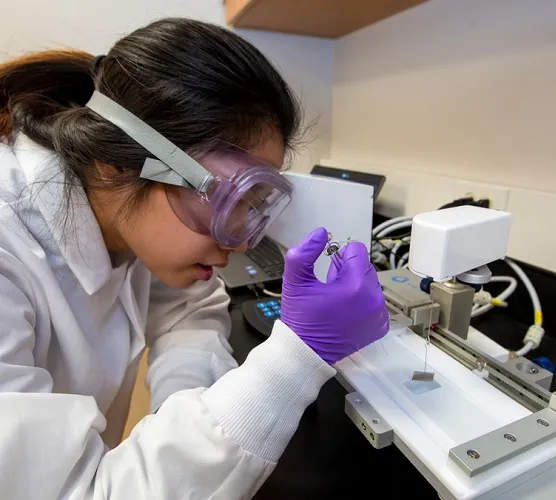
The Research Institute for Fragrance Materials needed to publish its research to contributing member companies: materials, studies, literature references, toxicology reports, usage data, and generated molecular diagrams, all drawn from a large relational database and cross-linked in every direction.
IdeaBlade had built the institute’s previous application in Silverlight. When that platform reached end of life the institute engaged IdeaBlade again to rebuild it for the web in Angular. The users are scientists who arrive knowing what they are looking for; they asked for screens dense with data and a single search interface over a complicated graph of materials, studies, references, safety information and chemical properties — including search by drawing molecular shapes. Data is retrieved from many tables, cached in the browser, and assembled into large domain object graphs.
What we delivered
A member-facing web application giving contributing companies access to the institute’s toxicology, literature and materials data, replacing an end-of-life Silverlight application. IdeaBlade delivered the whole engagement — analysis, design, development, QA and deployment — because the client has almost no technical staff of its own. The first release was delivered in under six months.
Technology
Angular and TypeScript on the client; ASP.NET, C# and Entity Framework on the server; Breeze for data management; Node for build tooling; Microsoft SQL Server; Windows Server. A third-party library generates molecular structure diagrams. Requirements and documentation in Microsoft Word and task tracking in Excel, shared on OneDrive, at the client’s direction.
Complexity
- Navigating a densely cross-referenced graph of materials, studies, references and safety data through one search interface.
- Assembling large object graphs in the browser and pivoting screens around them.
- Generating several-hundred-page printable reports in seconds.
- Carrying sole responsibility for a technical program at a client with no internal engineering function.
The solution
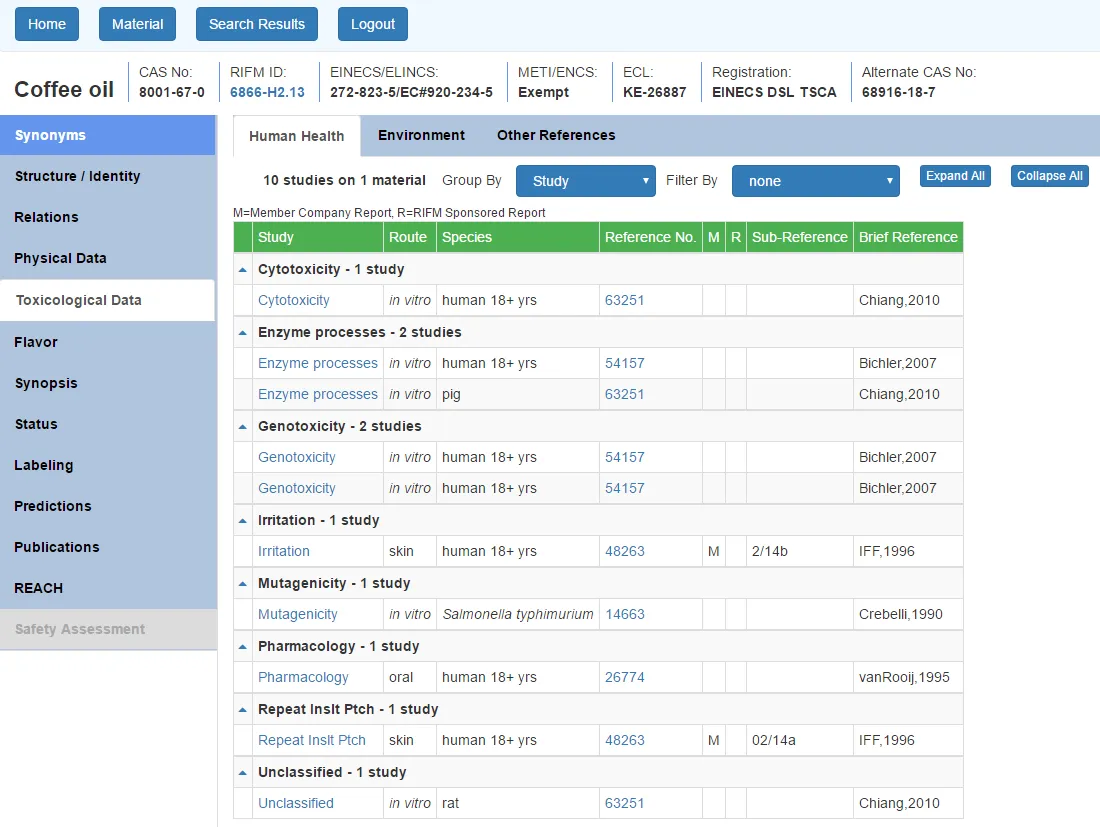
Fragrance and Flavor Page
Data are retrieved from multiple database tables, cached, and assembled in the browser app into large, complex domain object models. Screens pivot around these graphs to suit the user’s perspective. Data are grouped and sorted dynamically, based on user criteria, and presented in a tabs-within-tabs interface.
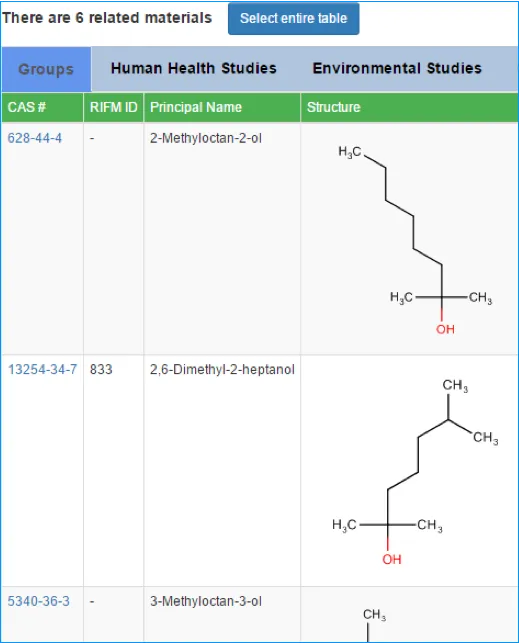
Molecular Images
A third-party library generates and displays molecular diagrams for materials.
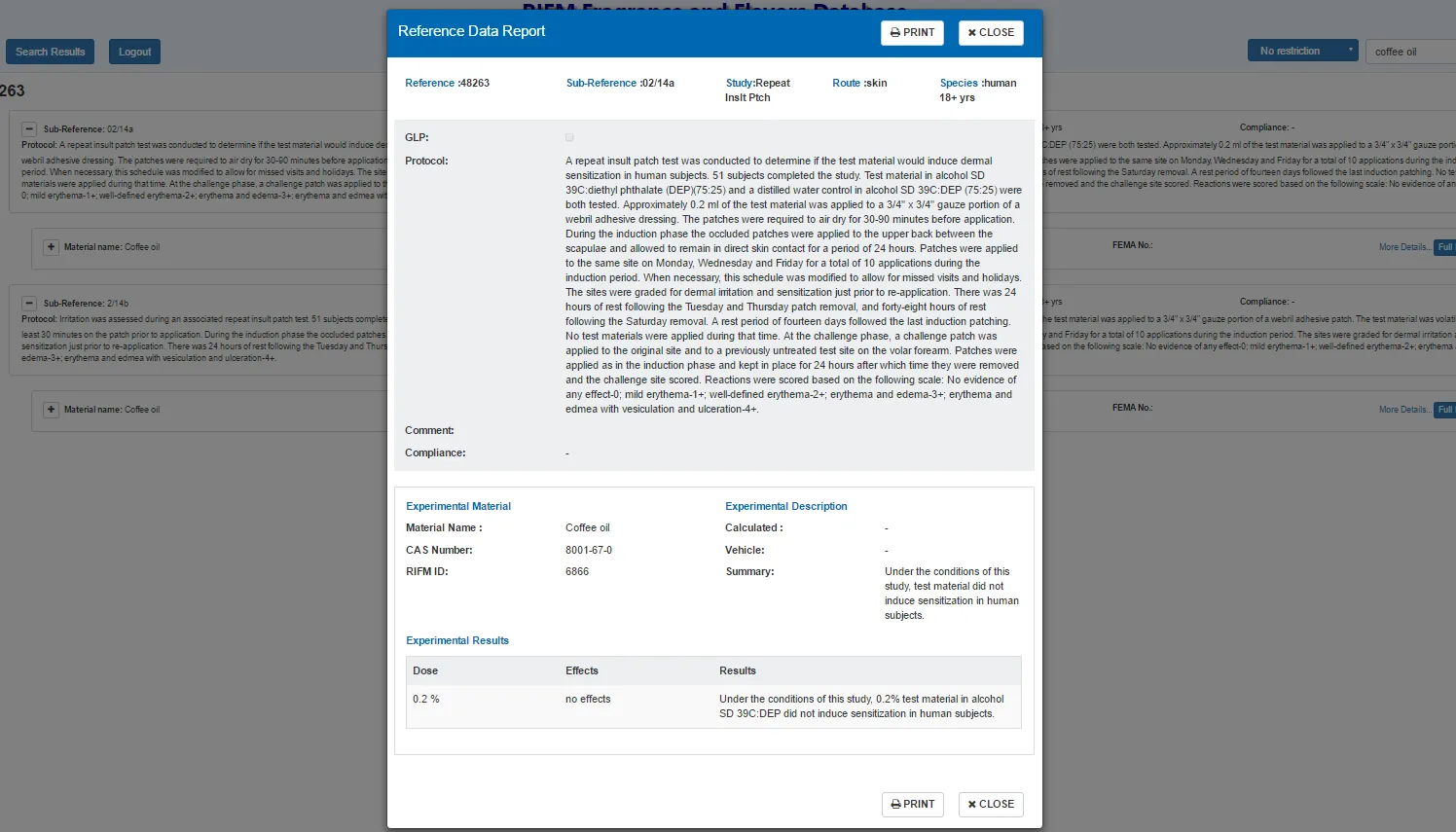
Custom Reports
The app dynamically creates printable reports and displays a preview in front of the dimmed application page. These reports render in seconds even when several hundred pages long.
Outcome
The Angular application is materially faster and more capable than the Silverlight system it replaced, and the first release shipped in under six months, on time and on budget. The relationship has continued through ongoing enhancements since.